AI Agent Design Patterns:
In this post, we’ll walk through four proven AI agent patterns in Flowise, showing how each one helps you structure agentic systems that are faster to build, easier to maintain, and better suited for real-world use.

4 Proven Patterns to Build Reliable AI Agents
Building an AI agent is easy.
Building an AI agent that is reliable, scalable, and trustworthy is where design patterns matter.
In this post, we’ll walk through four proven AI agent patterns in Flowise, showing how each one helps you structure agentic systems that are faster to build, easier to maintain, and better suited for real-world use.
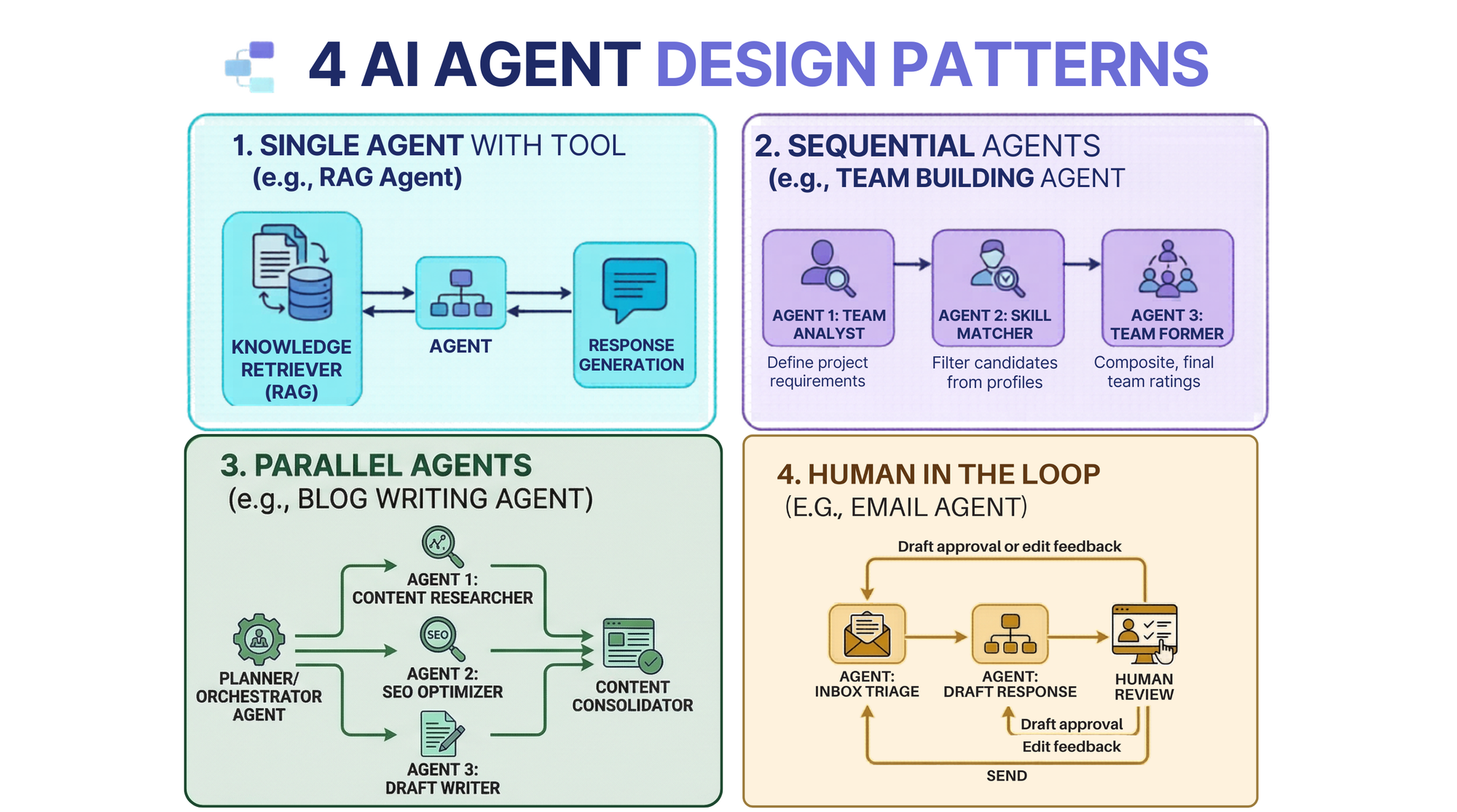
- Single Agent with a Tool, we will build a RAG Agent for our first use-case
- Sequential Agents, using a Team Building Agent as the example
- Parallel Agents, using a Blog Writing Agent as quick starter agent
- Human in the Loop, using an Email Agent as a custom agent example
Understanding these patterns gives you a strong foundation for building agentic systems that are not only powerful, but also maintainable and trustworthy. If you are building on Flowise, all of the agent design patterns below can be easily accessed and used with one click on the Flowise Marketplace.
Single Agent with a Tool
The simplest agent pattern is a single agent with access to tools.
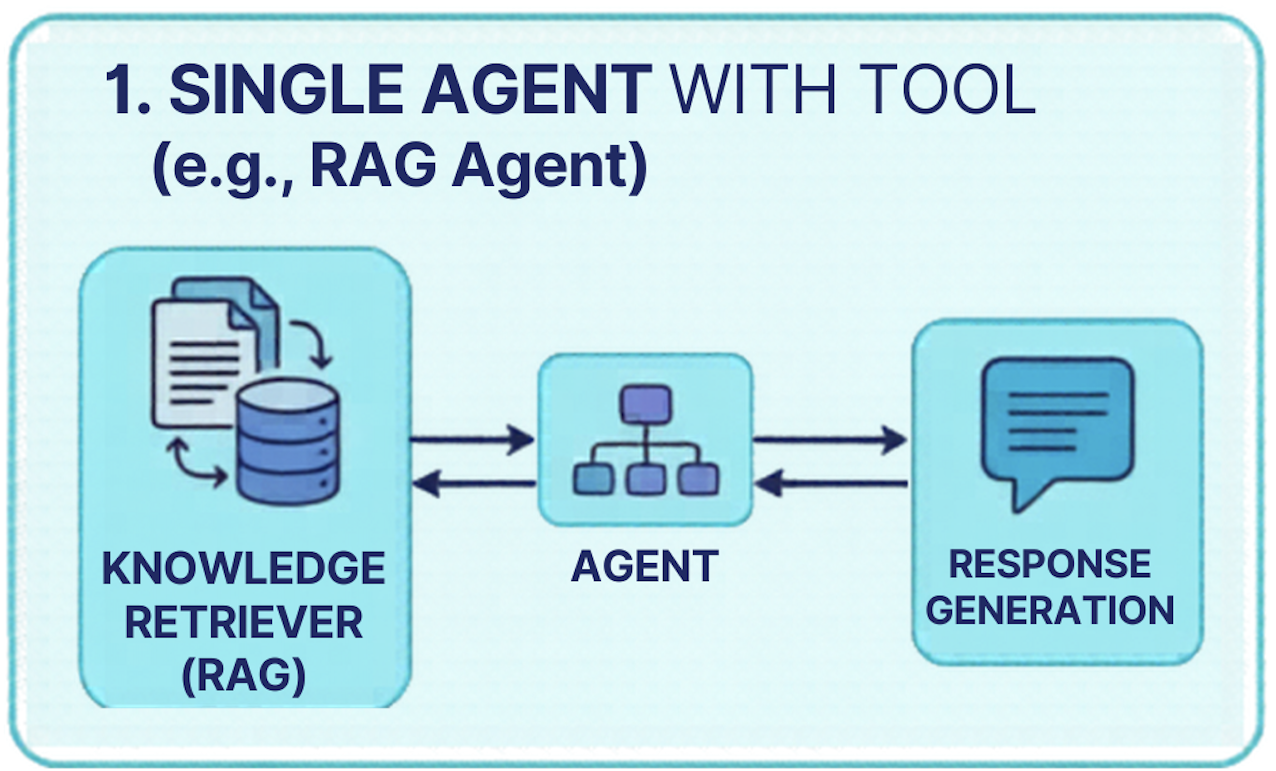
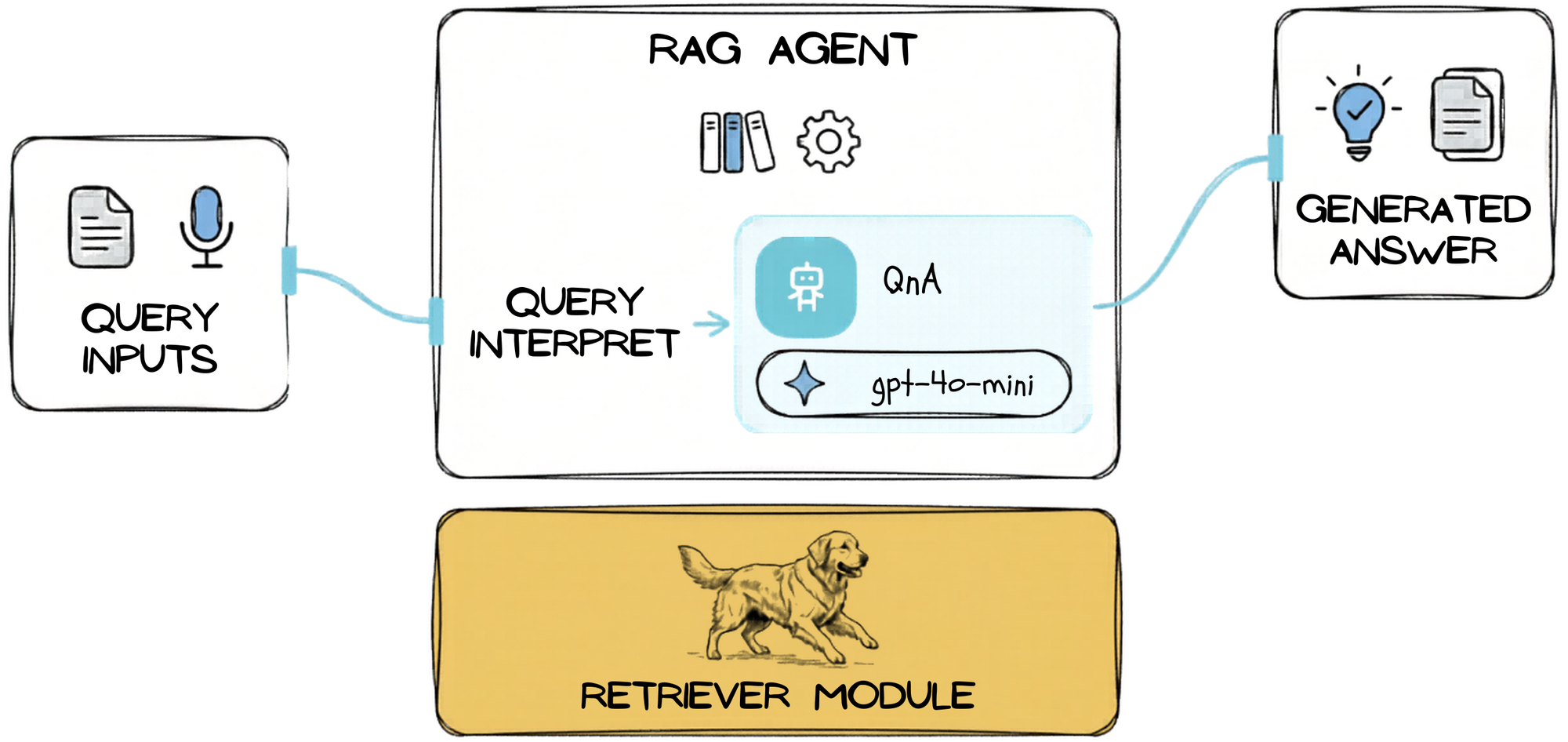
A common example is RAG (Retrieval-Augmented Generation). In this setup, one agent uses a retrieval tool to search a knowledge base before answering the user. Instead of relying only on the model’s internal knowledge, the agent can pull relevant documents, extract context, and generate a more grounded response. You can find a tutorial on how to build a RAG Agent in Flowise documentation.
Imagine a support assistant for product documentation. A user asks a question, the agent retrieves the most relevant docs, and the model uses that context to answer more accurately. This is one of the easiest and most effective ways to improve response quality.
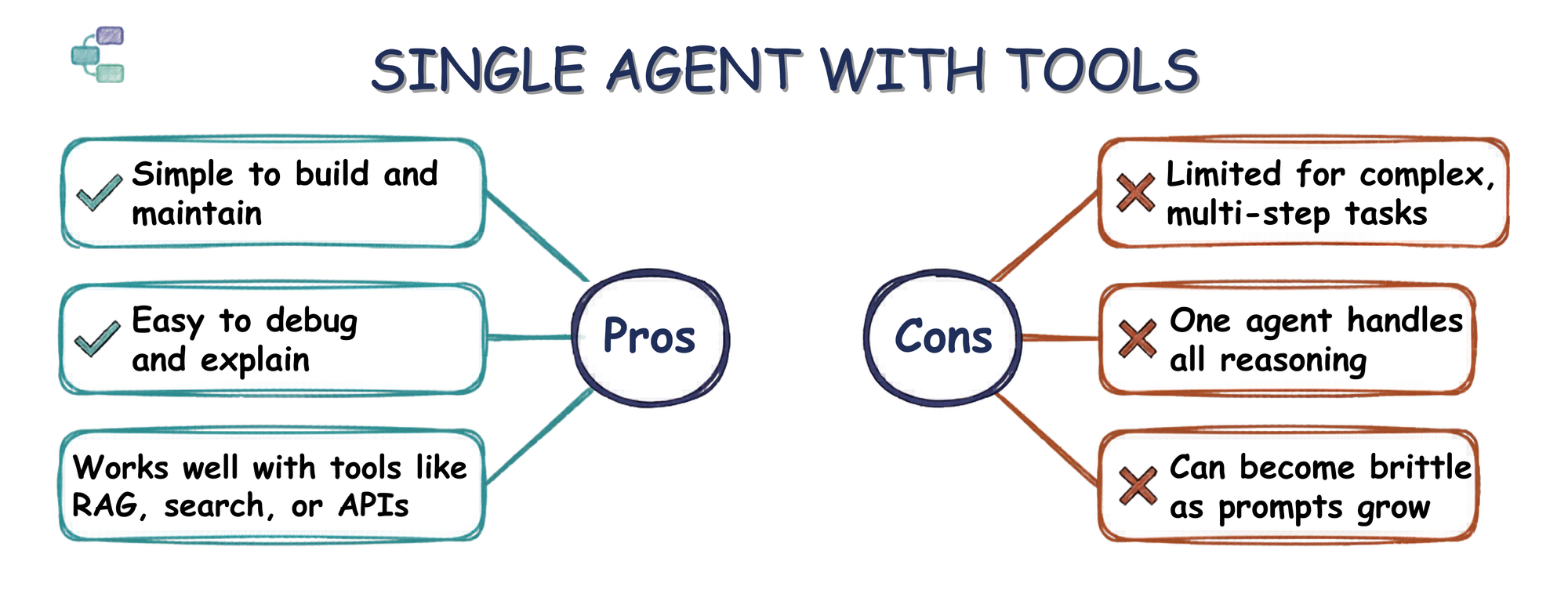
The biggest strength of this pattern is simplicity. It is easy to build, easy to understand, and works well when a single agent can handle the task with help from one or more tools.
Its main limitation is that one agent still has to do all the reasoning. As workflows become more complex, prompts get harder to manage and results become less predictable.
As a whole, this pattern is best for focused workflows where one agent can do the job with the right tools. It is a strong starting point, but it can struggle once tasks require more structure or specialization.
Sequential Agents
When one agent is not enough, it often makes sense to split the work across multiple specialized agents.
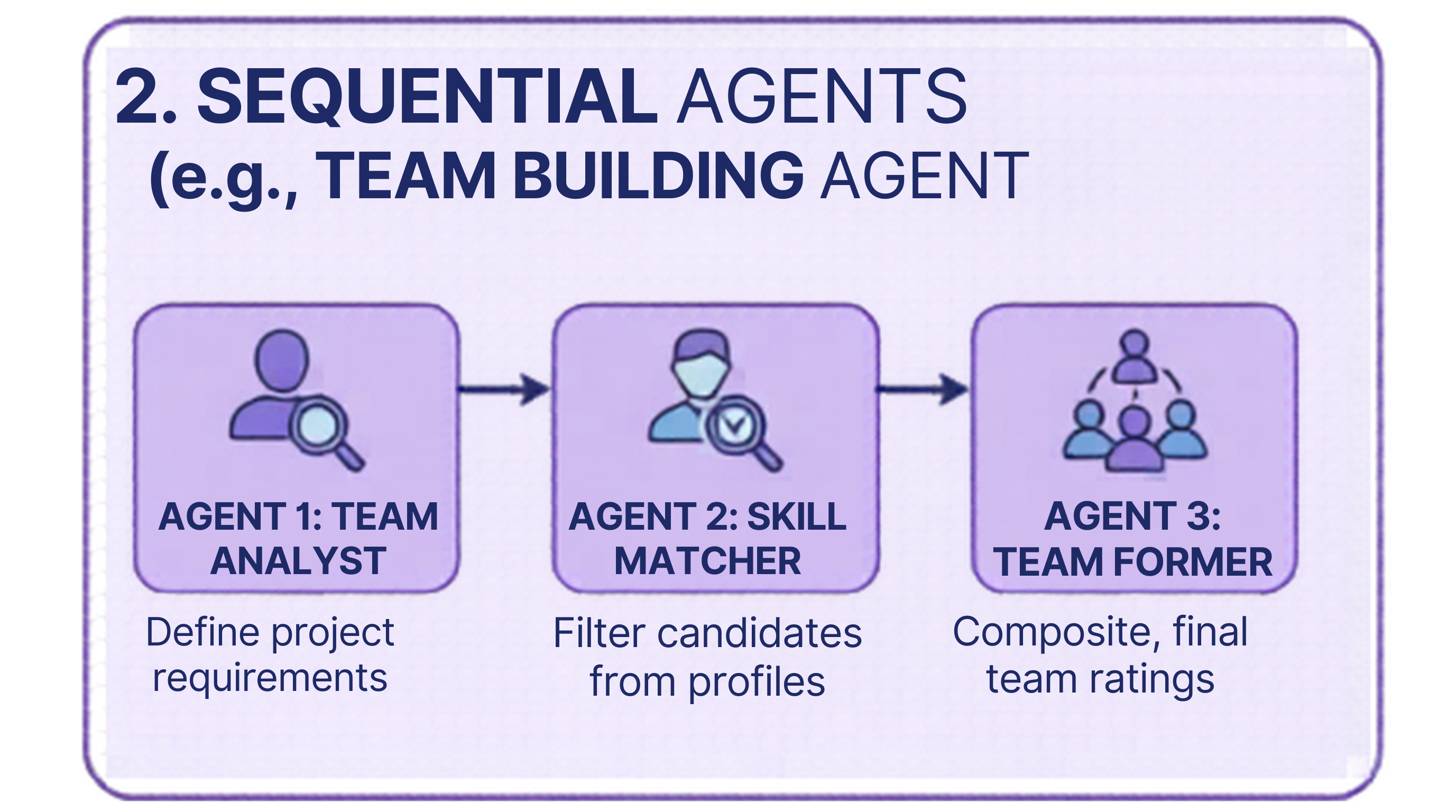
In a sequential pattern, the output of one agent becomes the input to the next. The workflow follows a fixed, step-by-step order.
For example, imagine a Team Building Agent:
- The first agent analyzes project requirements
- The second identifies the roles and skills needed
- The third matches those needs with candidate profiles
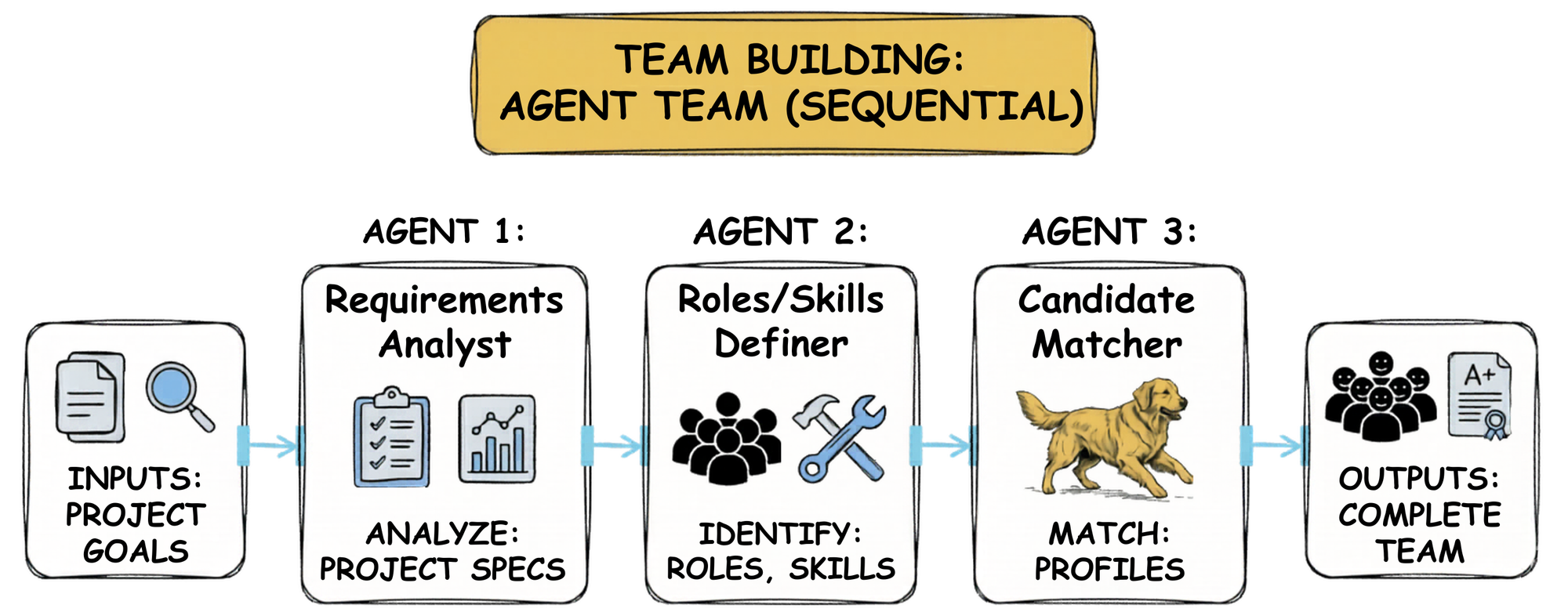
Because each step happens in order, the process is structured and easier to control. Each agent has a focused responsibility, which also makes the system easier to debug.
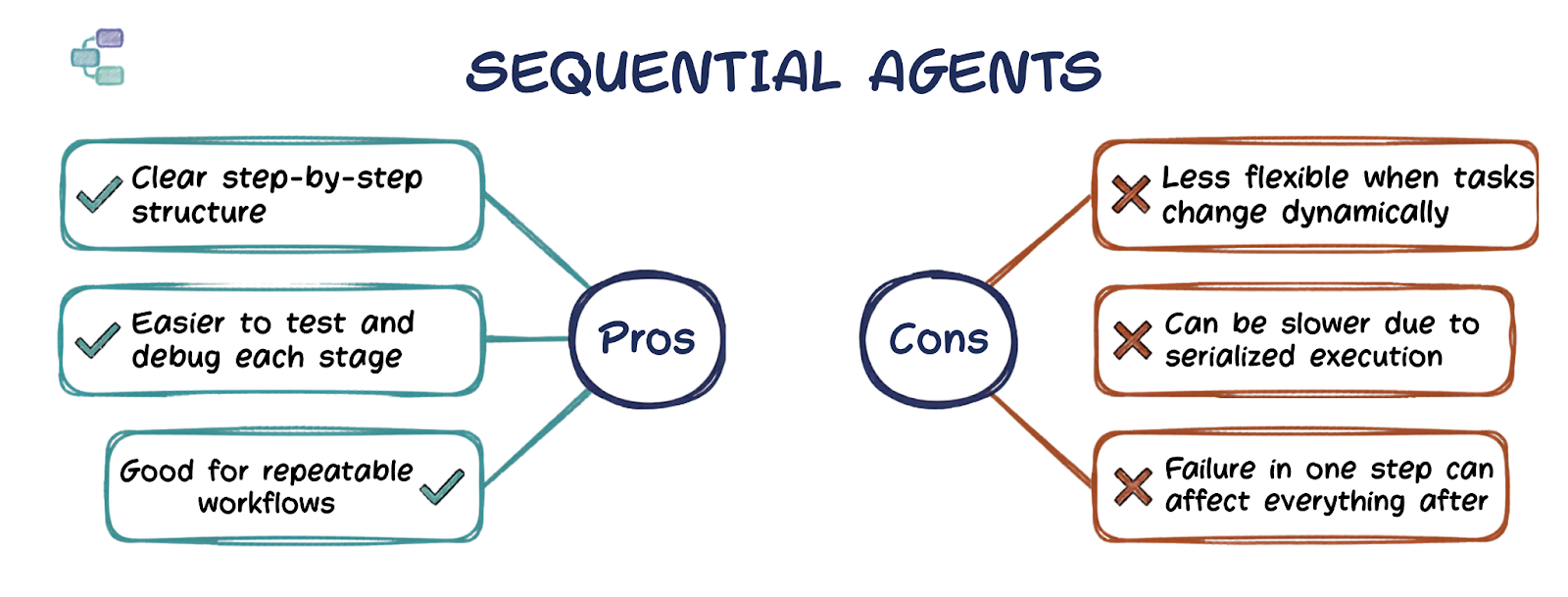
The main advantage of sequential workflows is predictability. When you need a repeatable process with clearly defined stages, this pattern works well.
The tradeoff is flexibility. If the workflow needs to adapt dynamically, a fixed sequence can become restrictive.
Parallel Agents
Not every task needs to happen in sequence. Some can run independently at the same time.
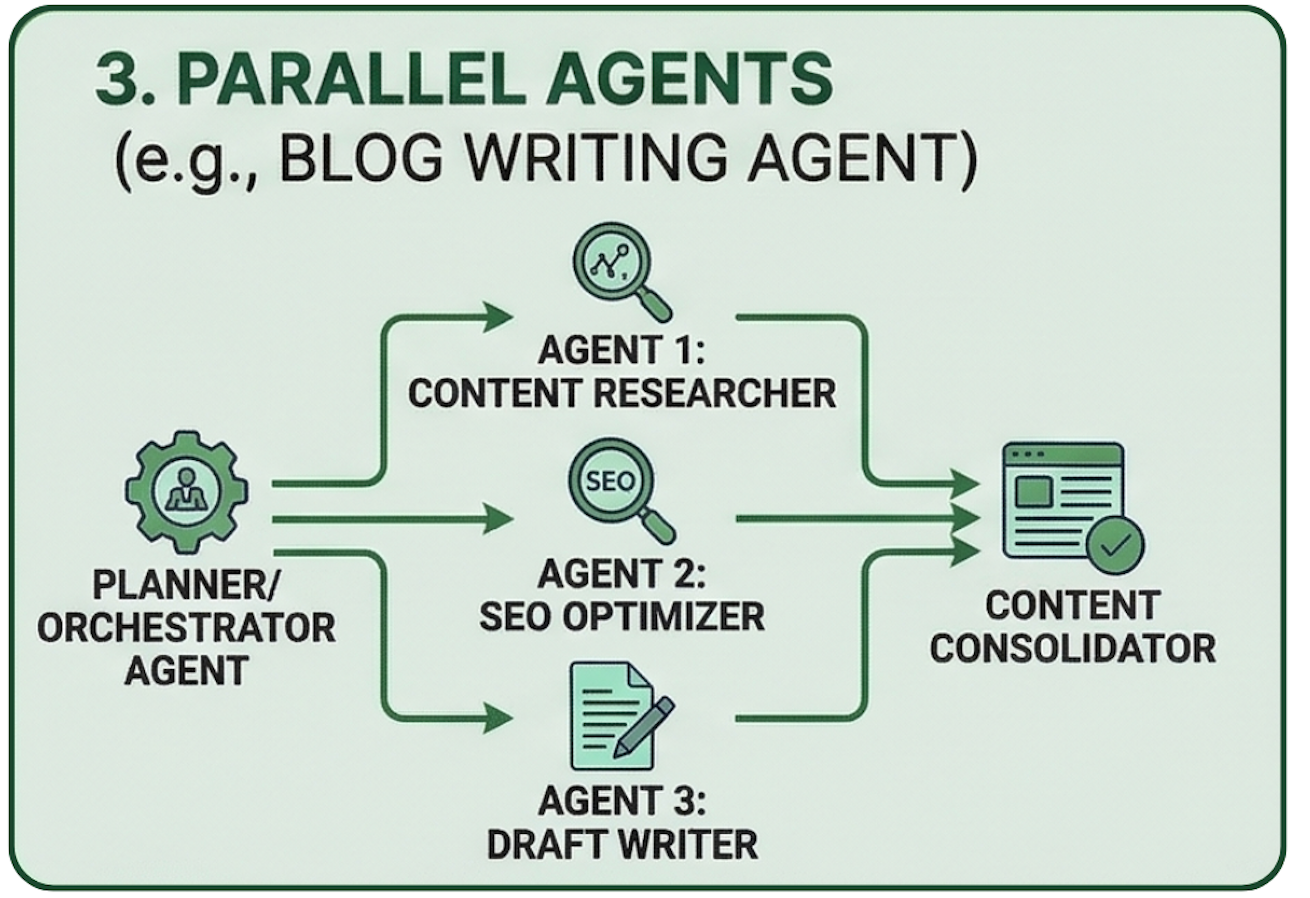
That is where parallel agents are useful.
Using the same Team Building example, once the project requirements are clear, you might launch several agents simultaneously:
- One searches for engineering candidates
- One evaluates design candidates
- One assesses project management fit
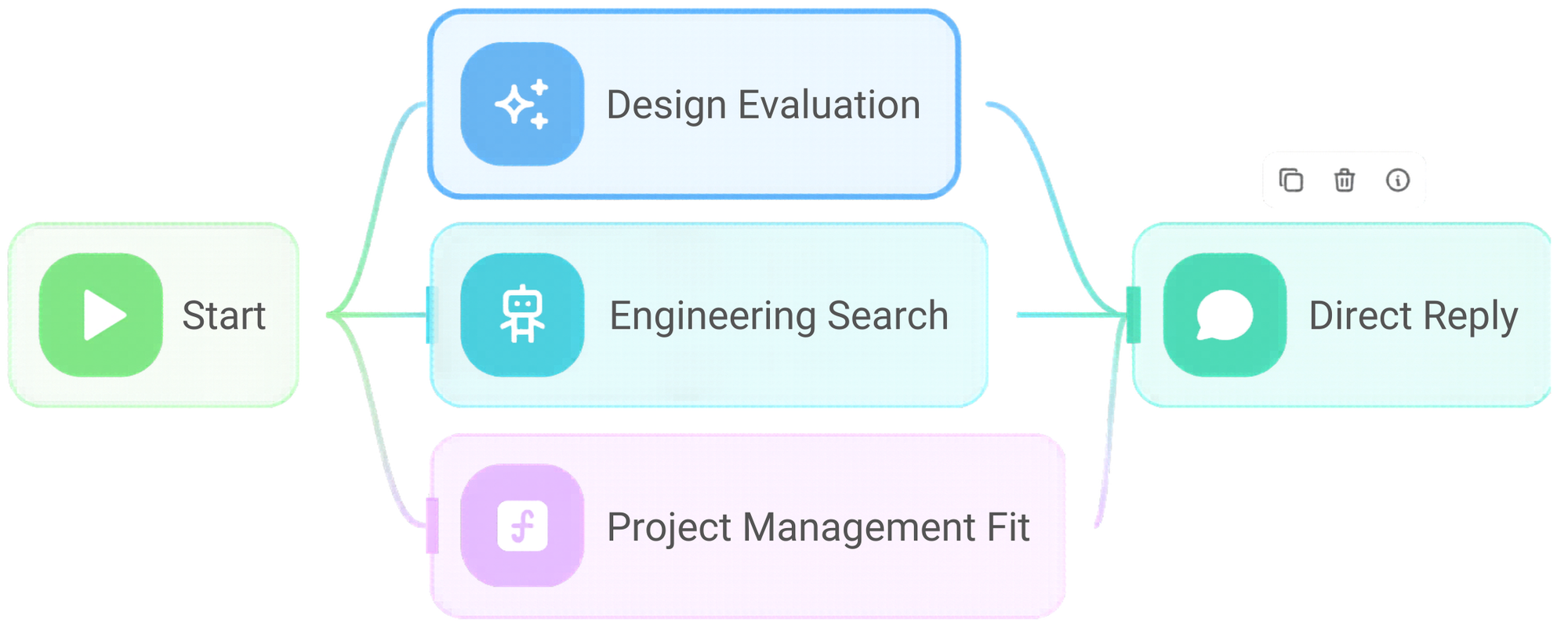
After those branches finish, a final agent can combine the results and recommend a team structure.
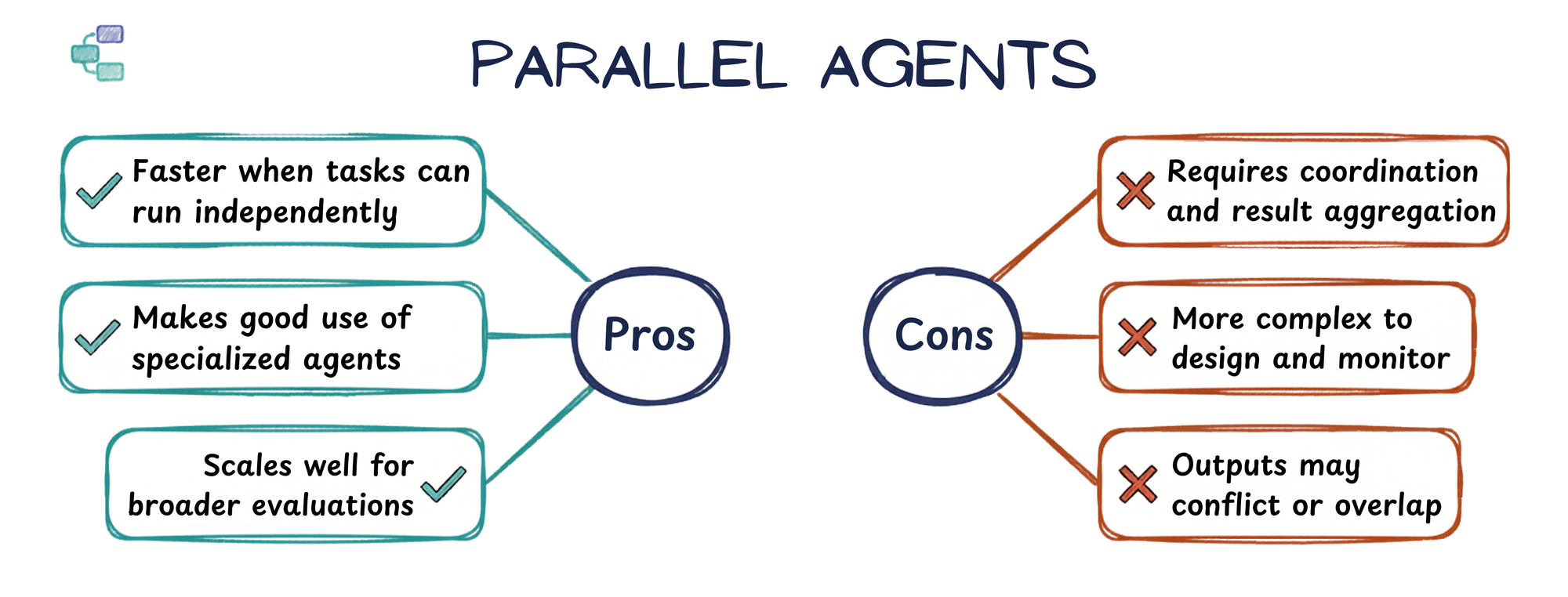
The biggest advantage of parallel design is speed. If subtasks are independent, running them concurrently can reduce latency significantly.
The tradeoff is coordination. Parallel systems often need an aggregation step, and combining outputs from multiple agents adds complexity. Also be aware that too many requests all at the same time can result in throttling and rate limiting depending on what services you are calling in each step.
Human in the Loop
One of the most important patterns in real-world AI systems is Human in the Loop.
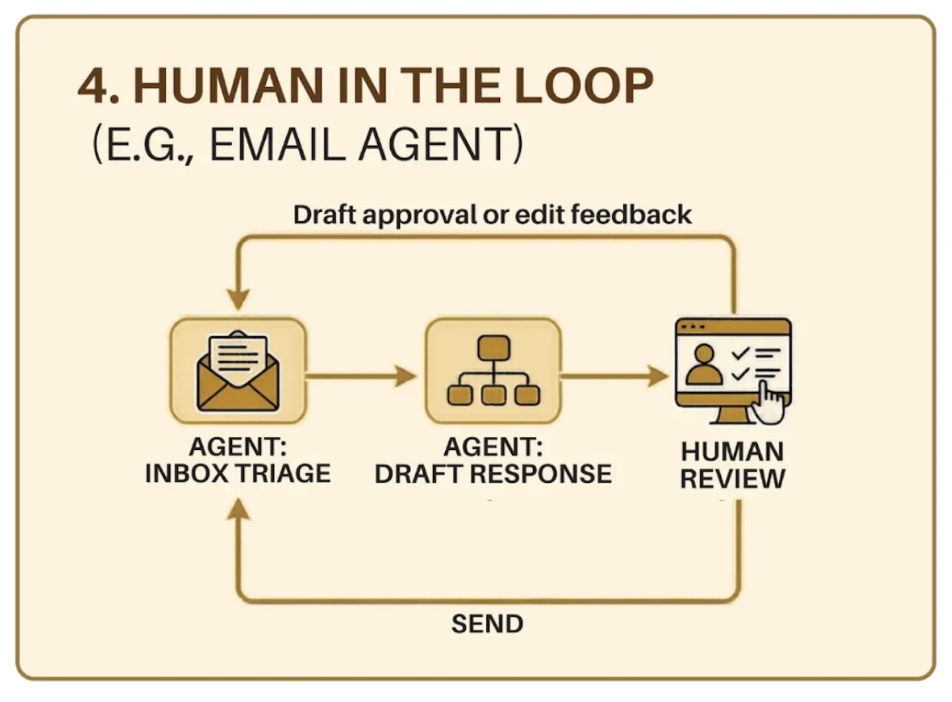
This matters when the stakes are higher and you do not want the system acting fully autonomously, and a good example is an Email Agent.
The agent can gather context, summarize information, and draft a message. But before anything is sent, a human reviews it, edits it if needed, and approves the final version.
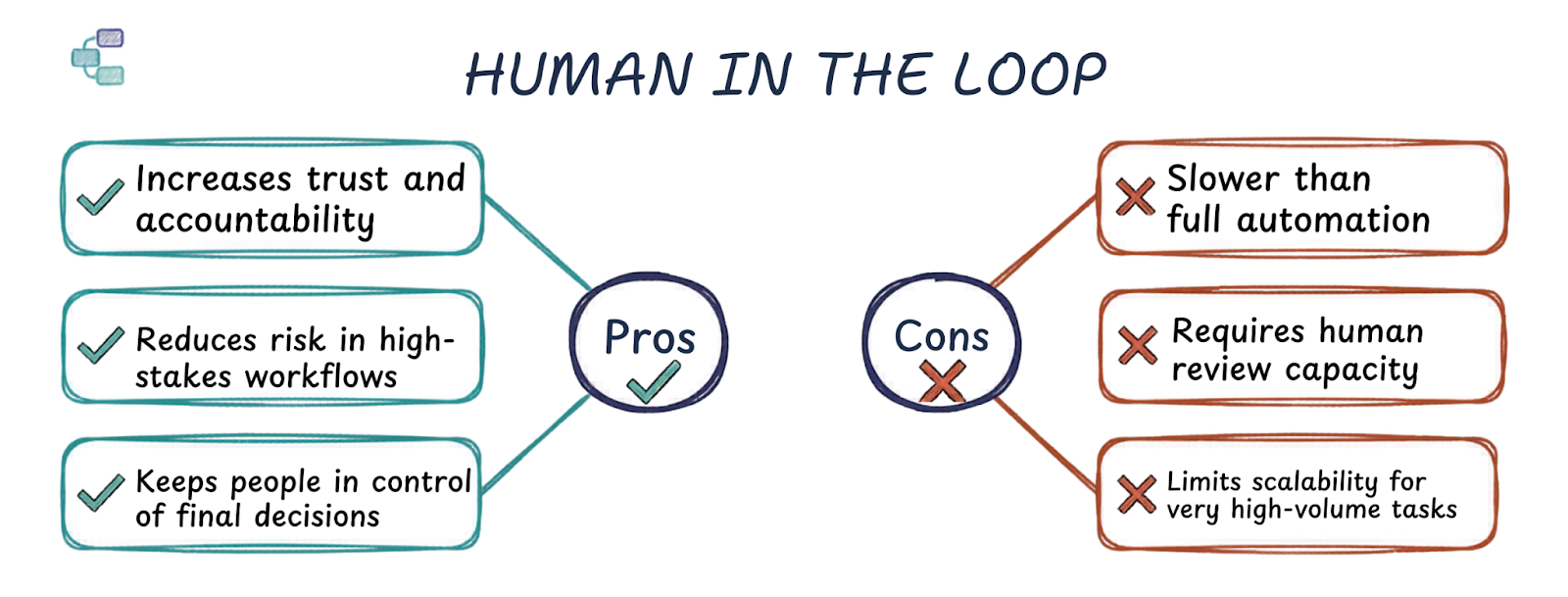
In Flowise, we are able to control where we get input using the Human Input Node. This pattern combines the speed of AI with human judgment and accountability, and the main benefit is trust.
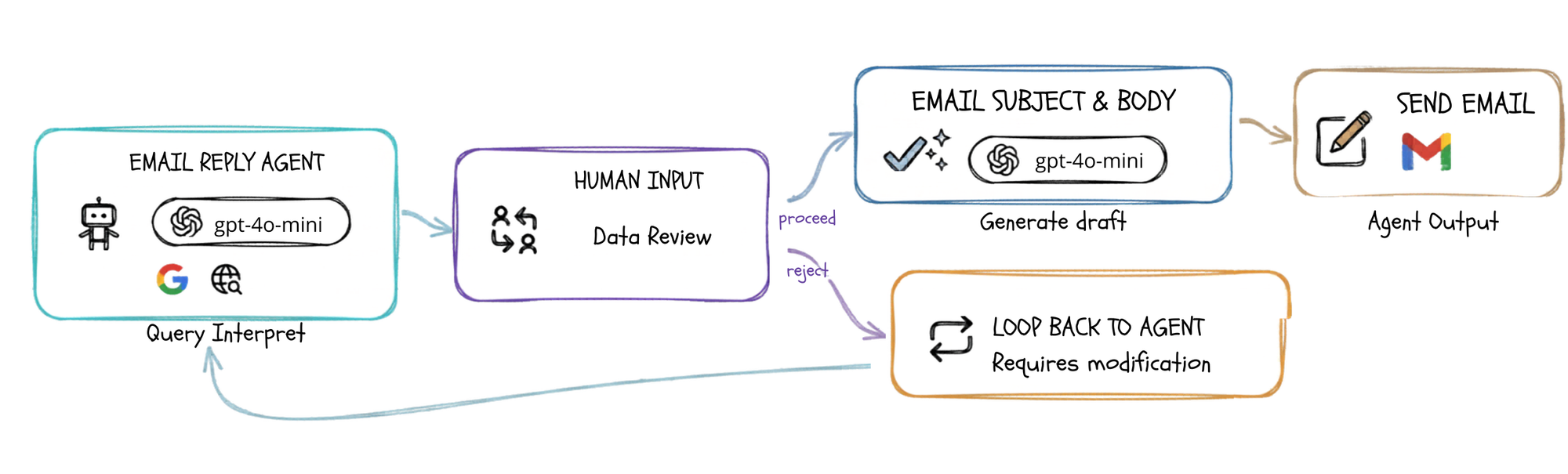
On top of manual checkpoints, agents can also be configured to request permission before executing tools, similar to how Claude asks for user approval before using MCP tools. In Flowise Agentflow V2, these human-in-the-loop checkpoints pause execution, save progress, and allow the workflow to resume from the same point afterward, which makes this pattern especially valuable for sensitive actions and real-world use-cases.
Check out this tutorial on human in the loop if you’d like to see an implementation of this pattern.
Choosing the Right Pattern
Each pattern solves a different kind of problem.
- Single Agent with a Tool works well when one agent can handle the task and just needs access to outside information or capabilities.
- Sequential Agents are best when the workflow needs structure, order, and dependable handoffs.
- Parallel Agents make sense when subtasks can run independently and speed matters.
- Human in the Loop is the right choice when accuracy, judgment, and accountability are critical.
In practice, the best systems often combine these patterns.
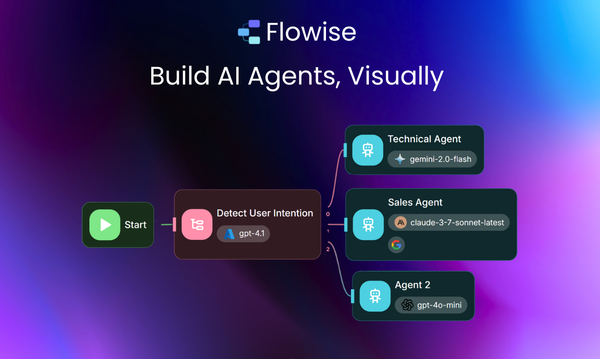
For example, you might use a single agent with retrieval to gather context, run multiple evaluators in parallel, and require human approval before taking action. Flowise is the perfect platform to build multi-agent systems because it lets you visually compose tools, logic, and interactions in a way that is easy to understand.
In this series we will go more in depth and build an example use case for each AI agent design pattern. We will also go over everything you need to know to be able to build custom multi-agent systems and advanced AI agent design patterns to take your AI workflows to the next level.